

Extracts & Concentrates: Methods and Results
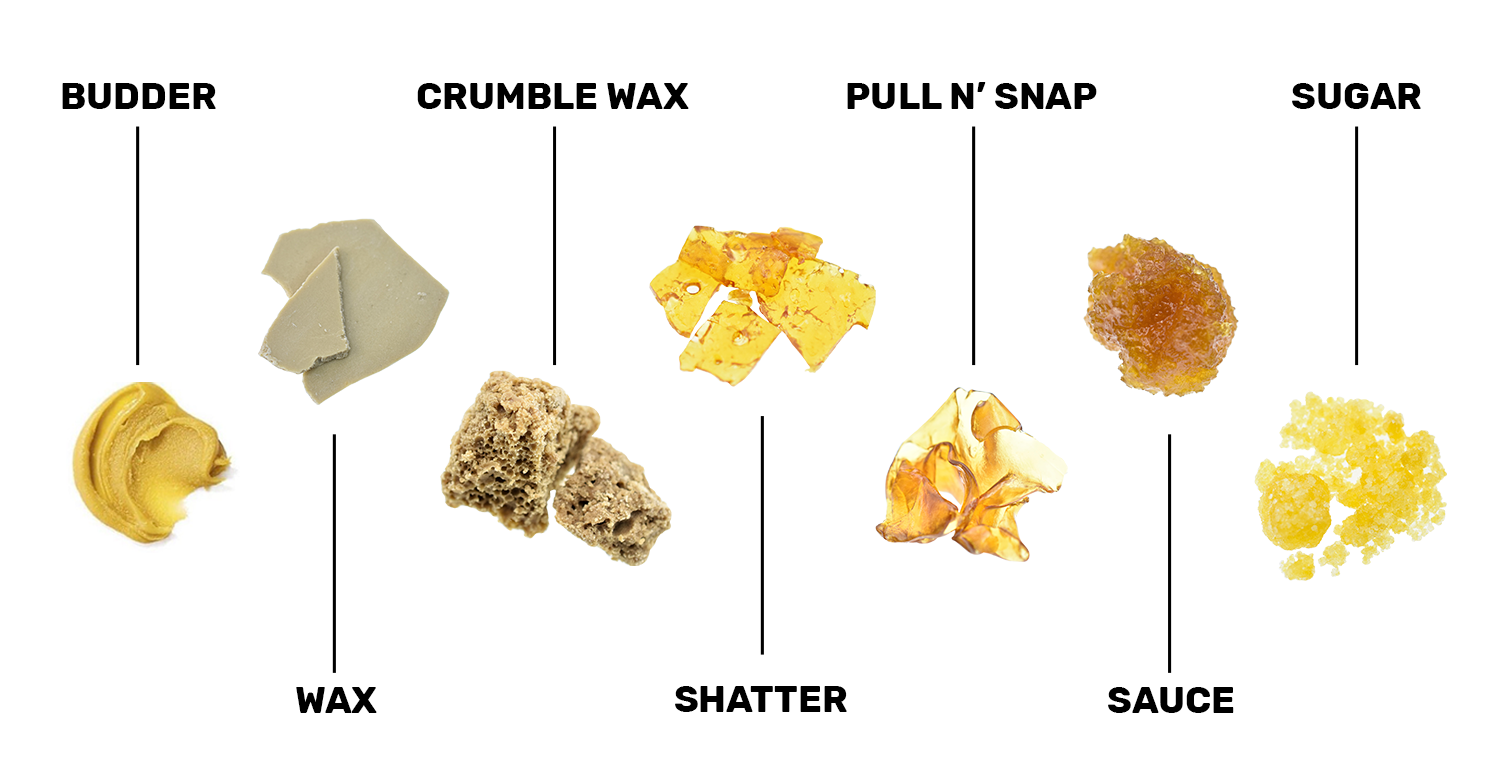
Different Types of Extracts & Concentrates
Every concentrate on our shelf started as raw cannabis flower. The difference between a $10 gram of shatter and a $40 gram of live rosin comes down to how the trichomes were separated from the plant. Here's how the two main extraction methods work, what they produce, and why it matters when you're shopping.
Two Methods, Dozens of Products
Cannabis extraction breaks into two camps: solvent-based (a chemical dissolves the trichomes off the plant) and solventless (mechanical separation using ice water, heat, or pressure — no chemicals). Both produce potent, flavorful concentrates, but the process changes the texture, flavor, and price.
You'll sometimes hear "extracts" used for solvent-based products and "concentrates" used for solventless. In practice, most people use the terms interchangeably. What matters is knowing which method made the product in your hand.
How It Works
A chemical solvent — usually butane (BHO), supercritical CO2, or ethanol — is passed through cannabis material to dissolve trichomes and cannabinoids. The solvent is then purged off, leaving behind concentrated oil.
Common products:
Solvent-based extraction is efficient and scalable, which is why shatter and live resin tend to be more affordable than solventless options. Covert Extraction shatter starts at $8.33/g at Green Health Eugene.
How It Works
Solventless extraction uses only ice water, heat, and pressure — no chemicals touch the plant. Ice water agitation separates trichome heads to make bubble hash. Heat and pressure squeezes that hash (or raw flower) through a rosin press to produce rosin.
Common products:
Solventless tends to be pricier because yields are lower and the process is more labor-intensive. Many consumers prefer the cleaner flavor profile and the fact that no chemical residue is possible. We carry solventless from Bonsai Farms, White Taffi, Sub Zero, and Dirty Arm Farm.
Isolate vs Broad Spectrum vs Full Spectrum
Regardless of extraction method, the final product falls into one of three categories based on what cannabinoids and terpenes survive the process:
Isolate — a single cannabinoid (usually THC or CBD) refined to 90%+ purity. Everything else is stripped out. Clean and potent, but you lose the entourage effect.
Broad Spectrum — retains multiple cannabinoids and terpenes but has THC removed. Common in CBD products.
Full Spectrum — all cannabinoids, terpenes, and THC intact. This is what most recreational concentrates are. Live resin and live rosin are both full-spectrum products, which is why they tend to deliver a more well-rounded effect than distillate.
What to Ask Your Budtender
If you're new to concentrates, here's how to narrow it down fast:
On a budget? Start with Covert Extraction shatter or Higher Cultures badder. Solvent-based, affordable, and consistent. Dabs from $10/g.
Want the cleanest flavor? Go solventless — Bonsai cold-cure badder or White Taffi live rosin. You'll pay more, but the terpene expression is noticeably different.
Need something portable? Vape cartridges and disposables use distillate or live resin oil in a ready-to-go format. No rig, no torch, no mess.
All extracts, cartridges, and vapes are 15% off every Tuesday and Saturday at Green Health Eugene.
Browse our full concentrates menu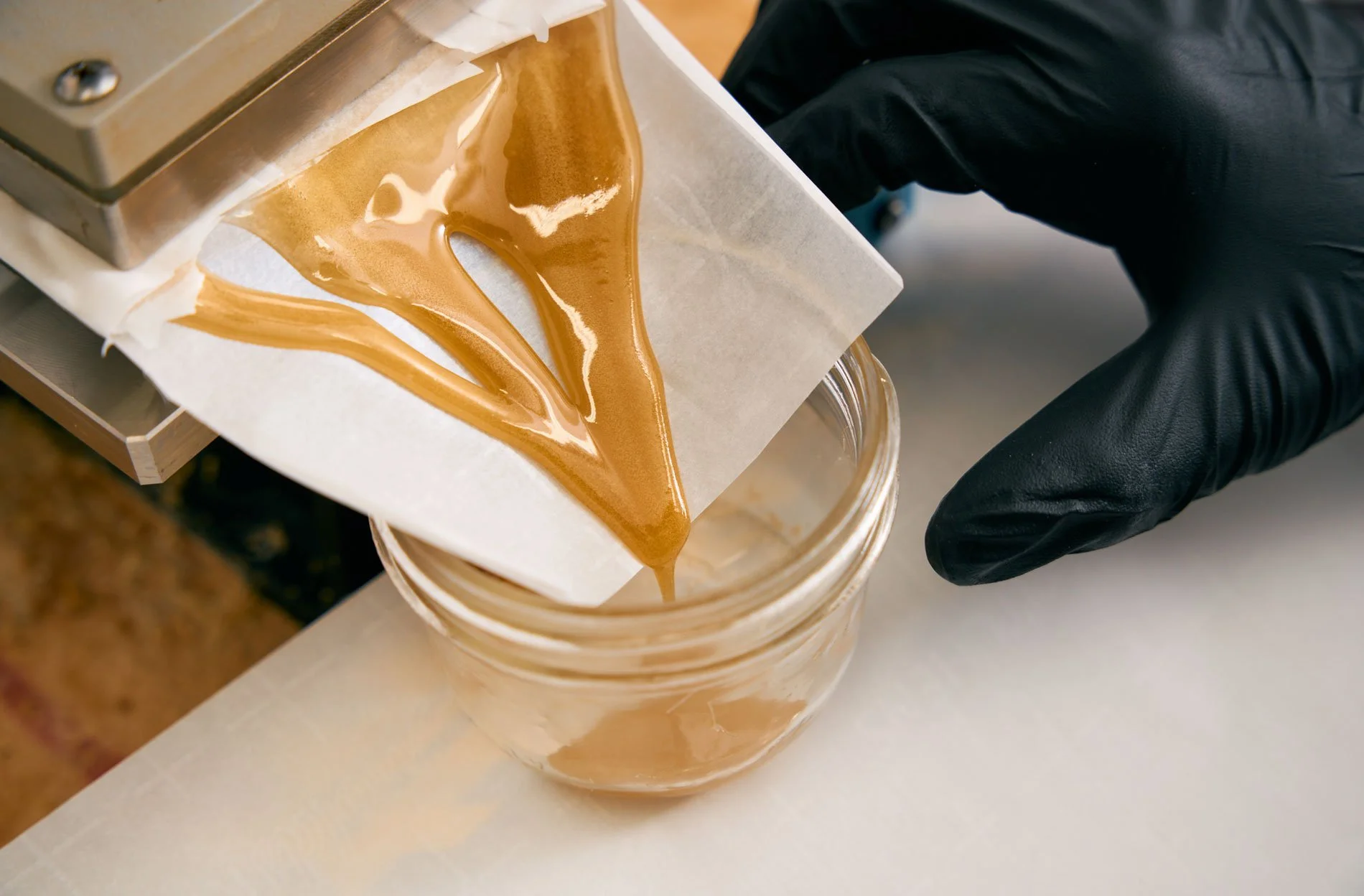
(Rosin Being Extracted From Bubble Hash)