

Delta-8 vs Delta-9 vs THCa — What's the Difference?
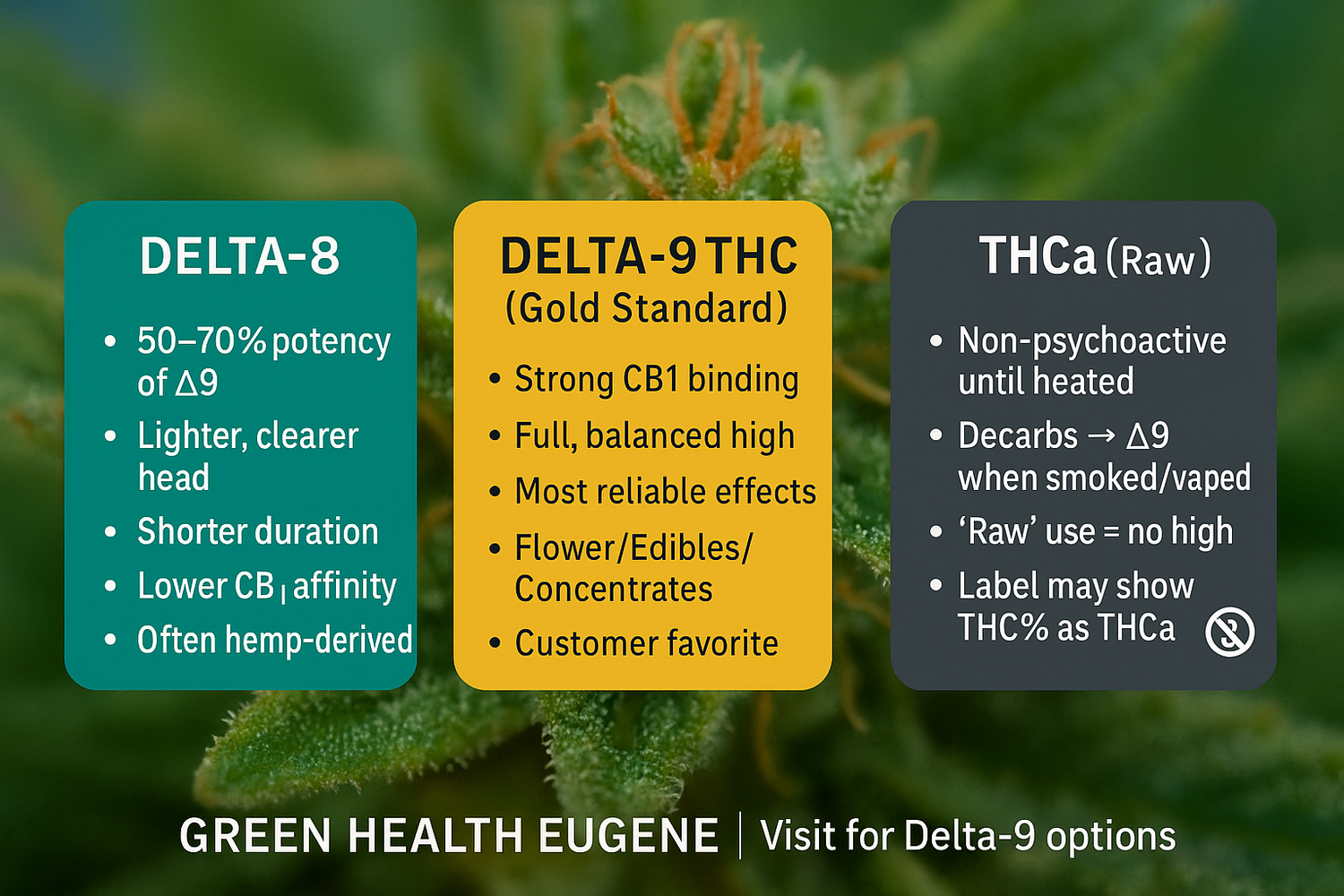
Delta-8, Delta-9, THCa — they're all technically forms of THC, but they hit your body in very different ways. If you've seen all three on dispensary shelves and wondered what the difference is, here's a straight breakdown with no filler.
Delta-9 THC
Potency: Full strength
High: Euphoric, relaxing, appetite-stimulating
Source: Cannabis flower
Legal in OR: Yes (rec + med)
Delta-8 THC
Potency: ~50–66% of Delta-9
High: Milder, clear-headed, shorter-lasting
Source: Synthesized from hemp CBD
Legal in OR: Gray area
THCa
Potency: Zero (until heated)
High: None raw — converts to Delta-9 when smoked/vaped
Source: Raw cannabis flower
Legal in OR: Yes
The Compound Behind the Cannabis Experience
Delta-9 THC is what most people mean when they say "THC." It binds directly to CB1 receptors in your brain, producing the classic effects: euphoria, relaxation, appetite stimulation, enhanced sensory perception, and pain relief. It's the most abundant psychoactive cannabinoid in cannabis and the most extensively studied.
Every flower strain on our shelf — from Eugreen's gas-forward hybrids to Fenario's Cap Junky — delivers its effects primarily through Delta-9. Same goes for our edibles, concentrates, and vape cartridges. When you buy cannabis at a licensed Oregon dispensary, Delta-9 is what you're getting.
Lighter Effects, Different Source
Delta-8 THC is an isomer of Delta-9 — the molecular structure is nearly identical, with one double bond shifted by a single position. That small change cuts the potency roughly in half. Users describe the experience as more clear-headed and less anxious than Delta-9, which appeals to some consumers who find full-strength THC too intense.
The catch: Delta-8 doesn't occur naturally in meaningful amounts. Most Delta-8 products are chemically synthesized from hemp-derived CBD, which puts them in a legal and regulatory gray area. Oregon's licensed dispensary market focuses on naturally produced Delta-9 cannabis. You're unlikely to find Delta-8 at a licensed shop — it's more common in gas stations and head shops where quality control and testing standards are inconsistent.
It Becomes Delta-9 When You Light It
THCa is the acidic precursor to Delta-9 THC. It exists naturally in raw cannabis flower — every nug on our shelf is technically high in THCa, not Delta-9, until heat is applied. The process of converting THCa to Delta-9 is called decarboxylation, and it happens automatically when you smoke, vape, or bake with cannabis.
In its raw form, THCa is non-intoxicating. Some consumers juice raw cannabis or use THCa tinctures for potential anti-inflammatory and neuroprotective benefits, though research is still limited. When you see a strain testing at "30% THCa" on a dispensary label, that's telling you how much Delta-9 the flower will produce once heated.
Which One Should You Buy?
As a licensed Oregon dispensary, everything on our shelf is Delta-9 THC cannabis — tested, labeled, and sourced from Oregon growers. We don't carry Delta-8 products because the unregulated manufacturing process doesn't meet our quality standards.
If you're concerned about THC being too strong, talk to your budtender. We can point you toward lower-THC strains, CBD-balanced products, or micro-dose edibles that give you control over intensity without resorting to synthesized alternatives.
New to cannabis? Start with a 25mg Magic Number soda or a single pre-roll and work up from there. Our staff has been doing this since 2014 — they'll find the right fit for you.
Browse flower Browse edibles Browse concentrates