


 Eugene Cannabis Education · Since 2014
The Green Health Blog — Cannabis Education, Strain Guides & Eugene Community News
Welcome to the Green Health Blog — your go-to resource for cannabis education, product guides, and local news from Eugene, Oregon. We write for everyone: locals from Bethel-Danebo, Santa Clara, and River Road who want to stay up to date on what’s new at our dispensary, travelers landing at Eugene Airport who want to understand Oregon’s cannabis laws, and commuters along Highway 99 looking for deals on their way through town.
Learn About Cannabis in Oregon
Oregon’s cannabis scene is always evolving — new genetics, updated regulations, and more product options than ever before. Our blog breaks it down in plain language so you can shop with confidence. You’ll find beginner-friendly guides covering how to choose the right strain, the differences between flower, edibles, and concentrates, and what to expect from each cannabinoid family.
Whether you’re brand new to cannabis or you’ve been a consumer for years, our education posts are built to help you get more out of every purchase.
Why Cannabinoids Matter — The Big Picture
CBD, CBG, CBN, THC, THCV — how each cannabinoid works, what they do differently, and why product labels are getting more sophisticated.
Read More →CBN — The Sleep Cannabinoid Explained
What CBN is, how it forms, why it's becoming the 2026 standard for nightly recovery, and the products on our shelf that lean into it.
Read More →CBG — The Daytime Cannabinoid
CBG is the precursor to most other cannabinoids. What it does, how it differs from CBD and CBN, and the focus-leaning daytime use case.
Read More →CBD — What It Does and Doesn't Do
CBD basics: what it is, what it actually does for most people, why it's not psychoactive in the traditional sense, and the CBD products at Green Health.
Read More →Solvent vs Solventless Concentrates
Live resin vs live rosin, BHO vs hash rosin, why solventless commands premium prices, and how to choose based on your priorities.
Read More →Cannabis Tinctures — Dosing & Use Guide
Sublingual vs swallowed, microdose to standard dose, how tinctures compare to edibles, and the brands we carry at Green Health.
Read More →Oregon Cannabis Law & OMMP Resources
Whether you’re visiting Eugene from out of state, holding an OMMP card, or just trying to make sense of OLCC purchase limits, our legal coverage breaks Oregon cannabis law into plain language. RSO and FECO guidance, Schedule III rescheduling news, daily and monthly limits, and the medical card process — all reviewed and kept current.
RSO vs FECO: Differences, Uses & Which Is Right for You
The complete guide to Rick Simpson Oil and Full Extract Cannabis Oil — what they are, how they're made, dosing, and what we recommend at the counter.
Read the Full Guide →Cannabis Schedule III — What It Means for Oregon Patients
The DEA's reclassification proposal and what it could change for OMMP cardholders, dispensary tax structures, and medical access in Oregon.
Read More →OLCC Cannabis Purchase Limits 2026
How much cannabis can you legally buy in Oregon? Recreational vs medical limits, daily and monthly caps, and how OLCC tracks it.
Read More →Eugene OMMP Card Guide 2026
Step-by-step guide to getting your Oregon Medical Marijuana Program card in Eugene — eligibility, doctors, costs, timeline, and what changes after.
Read More →Strain Spotlights & Product Features
Wondering what’s on the menu before you visit our Eugene dispensary? Our strain spotlights and product features highlight what’s fresh, what our staff is excited about, and what’s trending with our customers. We cover featured strains from trusted Oregon cultivators, new edible and concentrate drops, staff picks across every category, and how to make the most of our rotating daily deals. Think of it as a preview of what’s waiting for you at 607 Highway 99 North.
Cap Junky — Sativa or Indica? Effects & Profile
Heavy-hitting hybrid from Fenario Farms. Terpene profile, effects, what we observe at the counter, and how it compares to other Cap Junky phenos.
Read More →True Glue from Tao Gardens — Strain Review
Eugene-favorite indica from Tao Gardens. Sticky, gas-forward, deeply relaxing. Effects, terpenes, and our budtender notes from the shop.
Read More →Velvet Glove — Herbal Dynamics
Smooth indica-leaning hybrid. Terpene profile, expected effects, and why it's a regular in our rotation from Herbal Dynamics.
Read More →Ice Cream Cake — Herbal Dynamics
Classic dessert-forward indica. Sweet, creamy, sedating — the kind of strain customers buy on Friday and finish by Sunday.
Read More →Malibu Marker — Strain Profile
Bright, citrus-forward sativa-leaning hybrid. Effects profile, terpenes, and where it sits in our flower lineup.
Read More →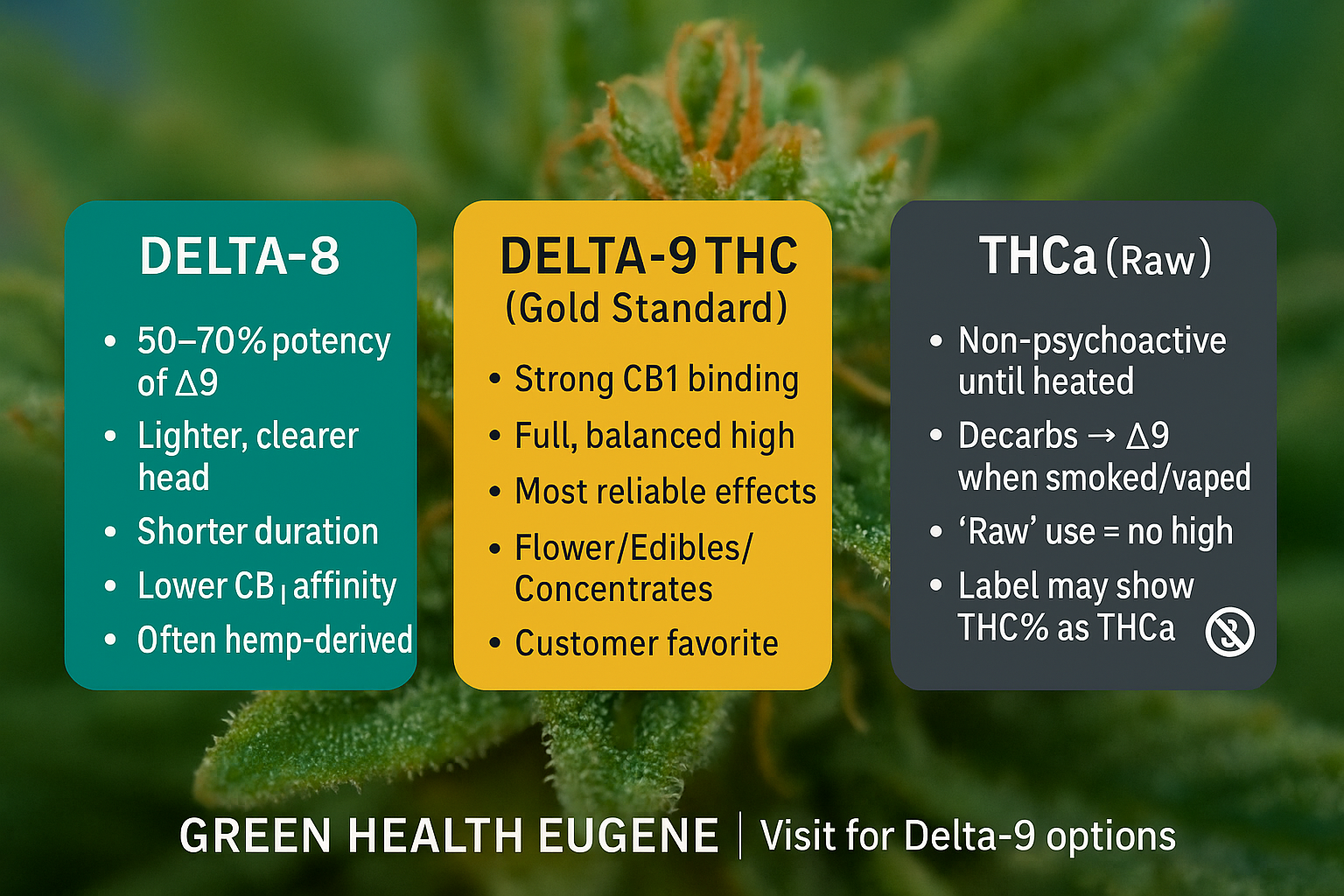
Delta-8 vs Delta-9 vs THCa — What's the Difference?
Delta-8, Delta-9, and THCa may sound similar, but only one delivers the full cannabis experience. Find out why Delta-9 is still the gold standard at Green Health Eugene.
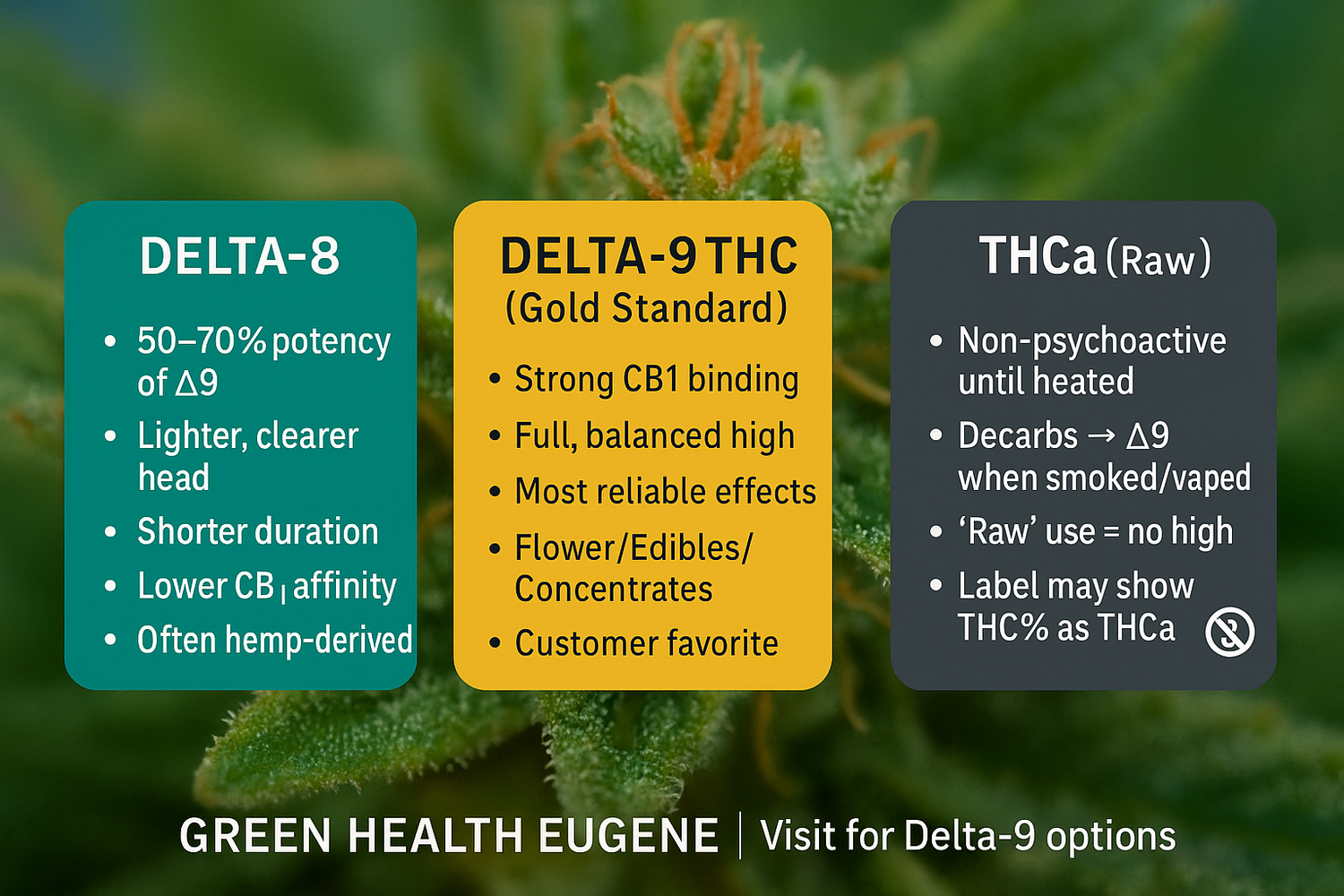
Delta-8, Delta-9, THCa — they're all technically forms of THC, but they hit your body in very different ways. If you've seen all three on dispensary shelves and wondered what the difference is, here's a straight breakdown with no filler.
Delta-9 THC
Potency: Full strength
High: Euphoric, relaxing, appetite-stimulating
Source: Cannabis flower
Legal in OR: Yes (rec + med)
Delta-8 THC
Potency: ~50–66% of Delta-9
High: Milder, clear-headed, shorter-lasting
Source: Synthesized from hemp CBD
Legal in OR: Gray area
THCa
Potency: Zero (until heated)
High: None raw — converts to Delta-9 when smoked/vaped
Source: Raw cannabis flower
Legal in OR: Yes
The Compound Behind the Cannabis Experience
Delta-9 THC is what most people mean when they say "THC." It binds directly to CB1 receptors in your brain, producing the classic effects: euphoria, relaxation, appetite stimulation, enhanced sensory perception, and pain relief. It's the most abundant psychoactive cannabinoid in cannabis and the most extensively studied.
Every flower strain on our shelf — from Eugreen's gas-forward hybrids to Fenario's Cap Junky — delivers its effects primarily through Delta-9. Same goes for our edibles, concentrates, and vape cartridges. When you buy cannabis at a licensed Oregon dispensary, Delta-9 is what you're getting.
Lighter Effects, Different Source
Delta-8 THC is an isomer of Delta-9 — the molecular structure is nearly identical, with one double bond shifted by a single position. That small change cuts the potency roughly in half. Users describe the experience as more clear-headed and less anxious than Delta-9, which appeals to some consumers who find full-strength THC too intense.
The catch: Delta-8 doesn't occur naturally in meaningful amounts. Most Delta-8 products are chemically synthesized from hemp-derived CBD, which puts them in a legal and regulatory gray area. Oregon's licensed dispensary market focuses on naturally produced Delta-9 cannabis. You're unlikely to find Delta-8 at a licensed shop — it's more common in gas stations and head shops where quality control and testing standards are inconsistent.
It Becomes Delta-9 When You Light It
THCa is the acidic precursor to Delta-9 THC. It exists naturally in raw cannabis flower — every nug on our shelf is technically high in THCa, not Delta-9, until heat is applied. The process of converting THCa to Delta-9 is called decarboxylation, and it happens automatically when you smoke, vape, or bake with cannabis.
In its raw form, THCa is non-intoxicating. Some consumers juice raw cannabis or use THCa tinctures for potential anti-inflammatory and neuroprotective benefits, though research is still limited. When you see a strain testing at "30% THCa" on a dispensary label, that's telling you how much Delta-9 the flower will produce once heated.
Which One Should You Buy?
As a licensed Oregon dispensary, everything on our shelf is Delta-9 THC cannabis — tested, labeled, and sourced from Oregon growers. We don't carry Delta-8 products because the unregulated manufacturing process doesn't meet our quality standards.
If you're concerned about THC being too strong, talk to your budtender. We can point you toward lower-THC strains, CBD-balanced products, or micro-dose edibles that give you control over intensity without resorting to synthesized alternatives.
New to cannabis? Start with a 25mg Magic Number soda or a single pre-roll and work up from there. Our staff has been doing this since 2014 — they'll find the right fit for you.
Browse flower Browse edibles Browse concentrates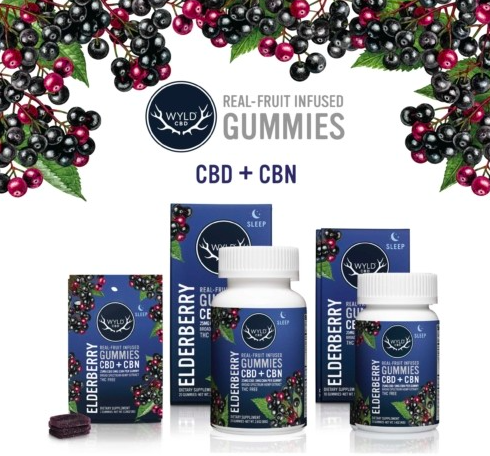
Understanding CBN and Its Medical Benefits
CBN, or Cannabinol, is a promising compound that has been gaining attention in the medical community for its potential health benefits. This cannabinoid, which is found in the cannabis plant, has been shown to promote sleep, reduce inflammation, and stimulate appetite.
If you've heard someone call CBN the "sleepy cannabinoid," there's a reason — it's the compound most associated with sedation and deep relaxation. But CBN is more nuanced than its reputation suggests. Here's what it actually does, how it compares to CBD and THC, and what products to look for.
What Is CBN?
CBN — cannabinol — is a minor cannabinoid found in cannabis. Unlike THC and CBD, which the plant produces directly, CBN forms when THC degrades over time through exposure to heat, light, and oxygen. Older cannabis that's been sitting on a shelf tends to have higher CBN content, which is why aged flower has a reputation for making people sleepy.
CBN is present in most cannabis in very small amounts — typically under 1%. To get meaningful doses, manufacturers extract and concentrate it into dedicated products like tinctures, capsules, and infused edibles.
How CBN Compares to the Major Cannabinoids
CBN
Mildly psychoactive
Sedating
Sleep & relaxation
Formed from aged THC
CBD
Non-psychoactive
Calming
Anxiety & inflammation
Produced by the plant
THC
Psychoactive
Euphoric
Pain & appetite
Produced by the plant
CBN sits between CBD and THC in terms of psychoactivity. On its own, it's very mildly intoxicating — most people don't feel "high" from CBN alone. But combined with THC, research suggests CBN may amplify THC's sedative effects, which is why CBN+THC edibles are popular as nighttime products.
What Does CBN Actually Do?
Sleep support — CBN's most well-known use. Many consumers report faster onset of sleep and fewer nighttime wake-ups when using CBN products before bed. The scientific evidence is still limited (mostly animal studies and anecdotal reports), but the consumer demand is real.
Physical relaxation — CBN may help with general body tension and discomfort. When paired with THC, users often describe a heavy, full-body calm that's distinct from CBD's lighter relaxation.
Appetite stimulation — Early research in animals suggests CBN may stimulate appetite, potentially making it useful for consumers who struggle with eating.
Note: CBN research is still in early stages. These are reported effects, not medical claims. Consult a healthcare professional before using cannabinoids for any health condition.
Where to Find CBN Products in Eugene
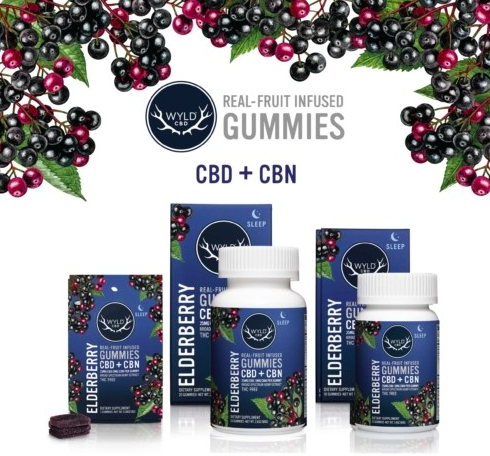
Most dispensaries carry a few CBN options. At Green Health Eugene, we prioritize keeping CBN products consistently in stock because our customers rely on them for their nightly routine. You'll find CBN in:
Wyld CBD+CBN gummies are one of our most popular sleep-focused products. Ask your budtender what CBN options are on the shelf today — availability rotates with new drops from Oregon producers.
All edibles, tinctures, and topicals are 15% off every Wednesday. CBN tinctures also qualify for the Sunday topicals and tinctures discount.
Browse edibles menu Browse topicals & tincturesHow to Use CBN for Sleep
Start low — if you're new to CBN, begin with 5–10mg about 30–60 minutes before bed. CBN edibles take time to kick in, just like any other edible.
Combine with THC for stronger sedation — a CBN+THC edible will typically produce deeper relaxation than CBN alone. Many nighttime gummies are formulated with both for this reason.
Tinctures hit faster — sublingual tinctures (held under the tongue for 60 seconds) can take effect in 15–30 minutes, compared to 45–90 minutes for edibles. Better option if you need help falling asleep quickly.
Be consistent — some consumers report that CBN works better after a few nights of regular use. Give it a week before deciding it doesn't work for you.
21+ Only
Are you 21 years of age or older?