


 Eugene Cannabis Education · Since 2014
The Green Health Blog — Cannabis Education, Strain Guides & Eugene Community News
Welcome to the Green Health Blog — your go-to resource for cannabis education, product guides, and local news from Eugene, Oregon. We write for everyone: locals from Bethel-Danebo, Santa Clara, and River Road who want to stay up to date on what’s new at our dispensary, travelers landing at Eugene Airport who want to understand Oregon’s cannabis laws, and commuters along Highway 99 looking for deals on their way through town.
Learn About Cannabis in Oregon
Oregon’s cannabis scene is always evolving — new genetics, updated regulations, and more product options than ever before. Our blog breaks it down in plain language so you can shop with confidence. You’ll find beginner-friendly guides covering how to choose the right strain, the differences between flower, edibles, and concentrates, and what to expect from each cannabinoid family.
Whether you’re brand new to cannabis or you’ve been a consumer for years, our education posts are built to help you get more out of every purchase.
Why Cannabinoids Matter — The Big Picture
CBD, CBG, CBN, THC, THCV — how each cannabinoid works, what they do differently, and why product labels are getting more sophisticated.
Read More →CBN — The Sleep Cannabinoid Explained
What CBN is, how it forms, why it's becoming the 2026 standard for nightly recovery, and the products on our shelf that lean into it.
Read More →CBG — The Daytime Cannabinoid
CBG is the precursor to most other cannabinoids. What it does, how it differs from CBD and CBN, and the focus-leaning daytime use case.
Read More →CBD — What It Does and Doesn't Do
CBD basics: what it is, what it actually does for most people, why it's not psychoactive in the traditional sense, and the CBD products at Green Health.
Read More →Solvent vs Solventless Concentrates
Live resin vs live rosin, BHO vs hash rosin, why solventless commands premium prices, and how to choose based on your priorities.
Read More →Cannabis Tinctures — Dosing & Use Guide
Sublingual vs swallowed, microdose to standard dose, how tinctures compare to edibles, and the brands we carry at Green Health.
Read More →Oregon Cannabis Law & OMMP Resources
Whether you’re visiting Eugene from out of state, holding an OMMP card, or just trying to make sense of OLCC purchase limits, our legal coverage breaks Oregon cannabis law into plain language. RSO and FECO guidance, Schedule III rescheduling news, daily and monthly limits, and the medical card process — all reviewed and kept current.
RSO vs FECO: Differences, Uses & Which Is Right for You
The complete guide to Rick Simpson Oil and Full Extract Cannabis Oil — what they are, how they're made, dosing, and what we recommend at the counter.
Read the Full Guide →Cannabis Schedule III — What It Means for Oregon Patients
The DEA's reclassification proposal and what it could change for OMMP cardholders, dispensary tax structures, and medical access in Oregon.
Read More →OLCC Cannabis Purchase Limits 2026
How much cannabis can you legally buy in Oregon? Recreational vs medical limits, daily and monthly caps, and how OLCC tracks it.
Read More →Eugene OMMP Card Guide 2026
Step-by-step guide to getting your Oregon Medical Marijuana Program card in Eugene — eligibility, doctors, costs, timeline, and what changes after.
Read More →Strain Spotlights & Product Features
Wondering what’s on the menu before you visit our Eugene dispensary? Our strain spotlights and product features highlight what’s fresh, what our staff is excited about, and what’s trending with our customers. We cover featured strains from trusted Oregon cultivators, new edible and concentrate drops, staff picks across every category, and how to make the most of our rotating daily deals. Think of it as a preview of what’s waiting for you at 607 Highway 99 North.
Cap Junky — Sativa or Indica? Effects & Profile
Heavy-hitting hybrid from Fenario Farms. Terpene profile, effects, what we observe at the counter, and how it compares to other Cap Junky phenos.
Read More →True Glue from Tao Gardens — Strain Review
Eugene-favorite indica from Tao Gardens. Sticky, gas-forward, deeply relaxing. Effects, terpenes, and our budtender notes from the shop.
Read More →Velvet Glove — Herbal Dynamics
Smooth indica-leaning hybrid. Terpene profile, expected effects, and why it's a regular in our rotation from Herbal Dynamics.
Read More →Ice Cream Cake — Herbal Dynamics
Classic dessert-forward indica. Sweet, creamy, sedating — the kind of strain customers buy on Friday and finish by Sunday.
Read More →Malibu Marker — Strain Profile
Bright, citrus-forward sativa-leaning hybrid. Effects profile, terpenes, and where it sits in our flower lineup.
Read More →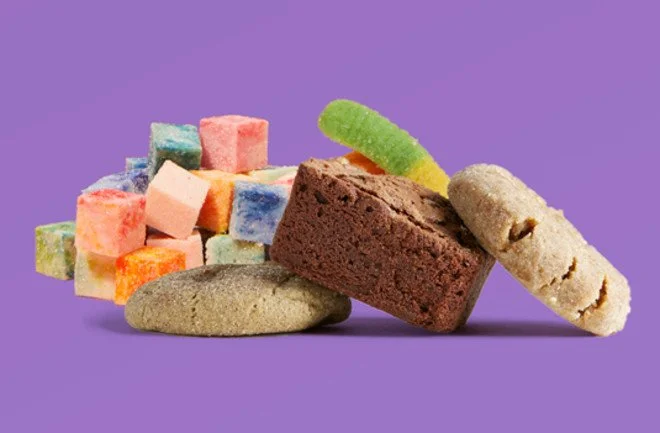
Cannabis Edibles & Servings
The experience of consuming edibles can vary based on several factors. It's important to choose the right dose for yourself and understand your personal tolerance. Each person's body responds uniquely to cannabis, and determining the appropriate dosage is a process. Edibles purchased from licensed dispensaries typically have clear dosage labels, but it can be more challenging to determine the dosage in homemade edibles. Additionally, edibles tend to have a stronger impact on the body compared to smoking, as THC is processed in the gut or mouth rather than the lungs. Users often report a combination of euphoria, extreme calmness, and relaxation in terms of bodily sensations.

Brownies, Cookies & gummies make up the bulk of OLCC recreational edibles
How does an edible work?
Edible forms of cannabis, including gummies, mints, brownies, cookies, tinctures, drinks, and other food products, are discreet and can produce long-lasting, safe effects. They’re great when consumed responsibly, and when you know how much you’re consuming. Typically edibles are either in solid or liquid form, and take orally. Other types of edibles include lozenges, mints & tinctures made with oils or food-grade alcohol. As your body metabolizes the edible, THC and other cannabinoids enter the blood stream and induce a “high”.
What will it feel like?
Remember, there are many factors that can impact your edible experience. Choosing the right dose for you and learning how much you can consume is a process and everyone’s body has the ability to respond to cannabis in a unique way. Products bought at a licensed dispensary will have their dosage clearly labeled, but the dosage of homemade edibles is much harder to determine. Edibles also tend to “hit” the body harder then smoking does due to the THC being processed in the gut or mouth as opposed to the lungs. Many users report euphoric side effects mixed with extreme calm and relaxation in regards to bodily sensations.
How much should I take?
How many milligrams of edibles should you take? It’s important to note that each individual has an ideal dose best suited for them and their body. The strength of an edible depends on many factors, including:
Type of edible
Dosage
Tolerance
Body weight
Metabolism
Two individuals may respond very differently to the same type of edible with the same dose—one may get very stoned, and one may not get stoned at all, depending on the above factors. Always start with a small dose of edibles and gradually increase until you find your ideal dose. The ideal edibles dose depends on a lot of things, including tolerance, individual body chemistry, body weight, and the experience you’re looking for. Dispensaries in Oregon currently have a 100mg maximum for hard edibles like chocolates & gummies. You will find these in an abundance of different combinations of flavors & strains specificity. The manufacturer may also divide the servings as they see fit, resulting 5mg / 10mg / 25mg & even 50mg “servings”. 10 gummies, 2 brownies or 5 chocolates are just some of the groupings you’ll find.
Cannabis & Paranoia: What's The Deal?
Paranoia is a common side effect that some individuals may experience when consuming cannabis or marijuana. While not everyone will encounter this effect, it's important to recognize that even frequent users could potentially trigger a paranoia episode.
Paranoia associated with cannabis use can manifest in various ways, including the inability to trust others, a sense of unease, loss of control over one's thoughts, and hypervigilance. Those who have experienced these feelings while smoking also often report self-conscious reactions and feeling threatened, which can lead to reclusiveness and a desire to be antisocial.

An example of someone NOT affected by higher THC levels
Anyone who has consumed Cannabis / Marijuana at some point in their life has more then likely experienced or met someone who has experienced paranoia while smoking. Not all consumers will experience this side effect but it’s important to remember that even the most frequent users could potentially set off a paranoia episode.
Paranoia & Side Effects
Paranoia can manifest in many different ways, when referencing cannabis use, typically presents as the inability to trust others, unrelaxed, losing control over ones thoughts & hypervigilance.
Those who have experienced these feelings while smoking also attest to self-conscious reactions & feeling threatened. Once the paranoia becomes noticeable, users frequently report reclusiveness & the want to be antisocial.
How does Cannabis & THC cause Paranoia?
Between a combination of manipulated brain processes & automatic responses, Cannabis (THC) creates a side effect called abnormal salience. Basically, the brains ability to differentiate meaning from one occurrence to the next is affected and leads to misinterpretation of vital information. These abnormal responses are intensified if the person has been recently exposed to genuine fear & anger. THC can also affect the Amygdala by means of our endo-cannabinoid receptors. Larger amounts of consumed THC can overstimulate the Amygdala and lead to extreme bouts of anxiety & fear.
Is there something to help with these Amygdala responses?
CBD has already been found to be an excellent anti-anxiety & anti-inflammatory tool but did you know it can help counter the effects of to much THC? Where THC centric phenotypes tend to play into an increase of these anxiety induced situations, CBD has been clinically found to reduce anxiety & even as a direct means of countering THC. It’s important to remember that everyone reacts differently, and depending on your own body chemistry, could have an extraordinarily different experience compared to a friend. Some people tend to not have any Sativa-anxiety like effects where some others end up being overtly sensitive to even the smallest amounts of THC. Dosage, frequency and potency are very important to keep in mind.
Tips & Tricks for staying “Low”
With Cannabis recently having started pushing THC limits into the 30% range, it’s more important then ever for new smokers to be aware of the potential side effects of these new powerhouse strains. Rule number 1 is start off slow and let your system adjust. Take a toke and wait for the full effects before going all out. If all else fails, know that the THC levels will subside and eventually the paranoia will break. It’s more about making yourself comfortable & not putting yourself into situations that can further stimulate the sensation associated with higher THC level strains.
Sources :
Leafly - Cannabis Paranoia
Extracts & Concentrates: Methods and Results
There are two primary methods for extracting concentrates from cannabis and hemp: solvent-based extraction and solventless extraction.
Solvent-based extraction involves using a specific chemical to dissolve the plant material and create oil. This method utilizes a solvent such as hydrocarbons (like BHO), supercritical CO2, or alcohol. After the extraction process, trace elements of the solvent are removed through a purging process to ensure the final oil is free from any residual chemicals.
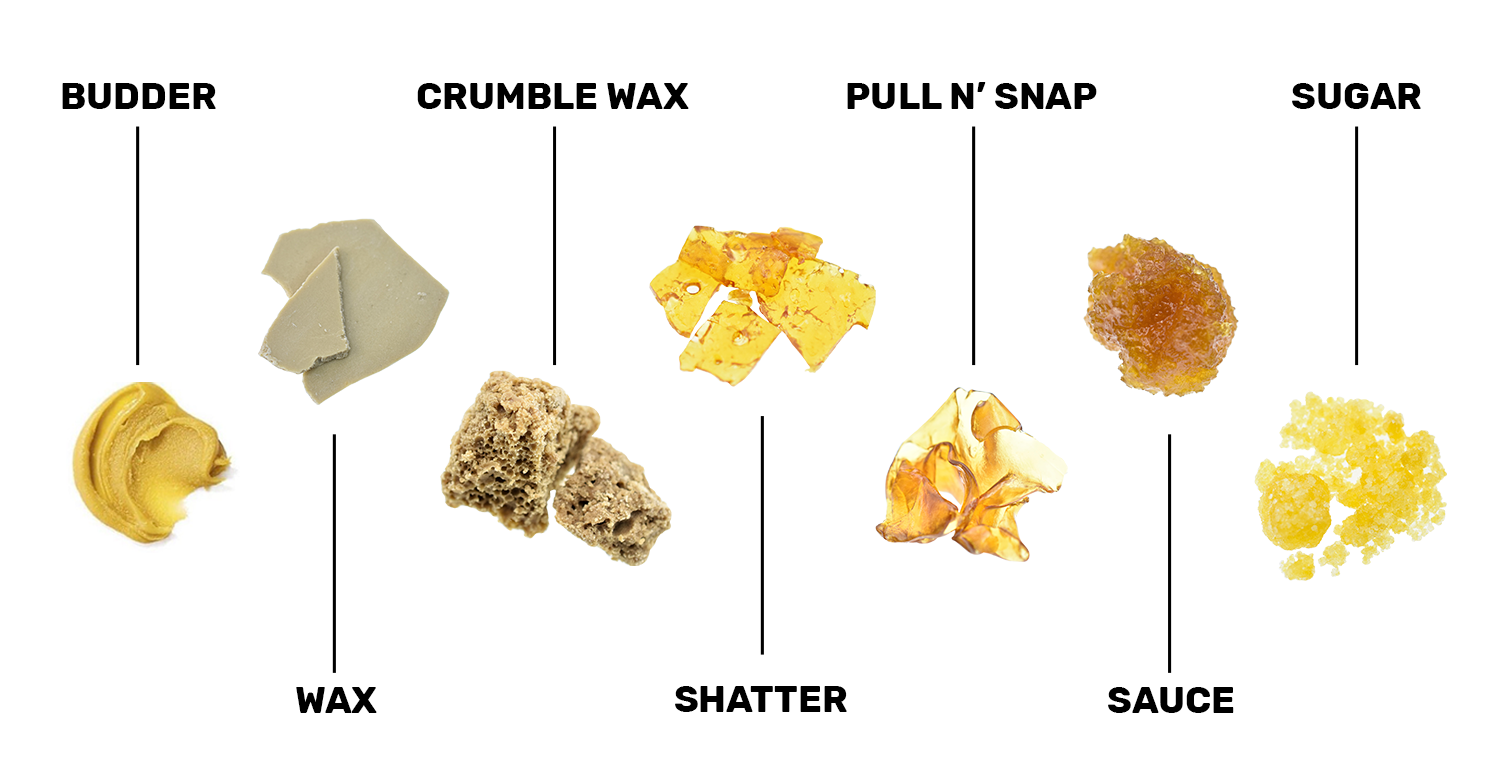
Different Types of Extracts & Concentrates
Every concentrate on our shelf started as raw cannabis flower. The difference between a $10 gram of shatter and a $40 gram of live rosin comes down to how the trichomes were separated from the plant. Here's how the two main extraction methods work, what they produce, and why it matters when you're shopping.
Two Methods, Dozens of Products
Cannabis extraction breaks into two camps: solvent-based (a chemical dissolves the trichomes off the plant) and solventless (mechanical separation using ice water, heat, or pressure — no chemicals). Both produce potent, flavorful concentrates, but the process changes the texture, flavor, and price.
You'll sometimes hear "extracts" used for solvent-based products and "concentrates" used for solventless. In practice, most people use the terms interchangeably. What matters is knowing which method made the product in your hand.
How It Works
A chemical solvent — usually butane (BHO), supercritical CO2, or ethanol — is passed through cannabis material to dissolve trichomes and cannabinoids. The solvent is then purged off, leaving behind concentrated oil.
Common products:
Solvent-based extraction is efficient and scalable, which is why shatter and live resin tend to be more affordable than solventless options. Covert Extraction shatter starts at $8.33/g at Green Health Eugene.
How It Works
Solventless extraction uses only ice water, heat, and pressure — no chemicals touch the plant. Ice water agitation separates trichome heads to make bubble hash. Heat and pressure squeezes that hash (or raw flower) through a rosin press to produce rosin.
Common products:
Solventless tends to be pricier because yields are lower and the process is more labor-intensive. Many consumers prefer the cleaner flavor profile and the fact that no chemical residue is possible. We carry solventless from Bonsai Farms, White Taffi, Sub Zero, and Dirty Arm Farm.
Isolate vs Broad Spectrum vs Full Spectrum
Regardless of extraction method, the final product falls into one of three categories based on what cannabinoids and terpenes survive the process:
Isolate — a single cannabinoid (usually THC or CBD) refined to 90%+ purity. Everything else is stripped out. Clean and potent, but you lose the entourage effect.
Broad Spectrum — retains multiple cannabinoids and terpenes but has THC removed. Common in CBD products.
Full Spectrum — all cannabinoids, terpenes, and THC intact. This is what most recreational concentrates are. Live resin and live rosin are both full-spectrum products, which is why they tend to deliver a more well-rounded effect than distillate.
What to Ask Your Budtender
If you're new to concentrates, here's how to narrow it down fast:
On a budget? Start with Covert Extraction shatter or Higher Cultures badder. Solvent-based, affordable, and consistent. Dabs from $10/g.
Want the cleanest flavor? Go solventless — Bonsai cold-cure badder or White Taffi live rosin. You'll pay more, but the terpene expression is noticeably different.
Need something portable? Vape cartridges and disposables use distillate or live resin oil in a ready-to-go format. No rig, no torch, no mess.
All extracts, cartridges, and vapes are 15% off every Tuesday and Saturday at Green Health Eugene.
Browse our full concentrates menu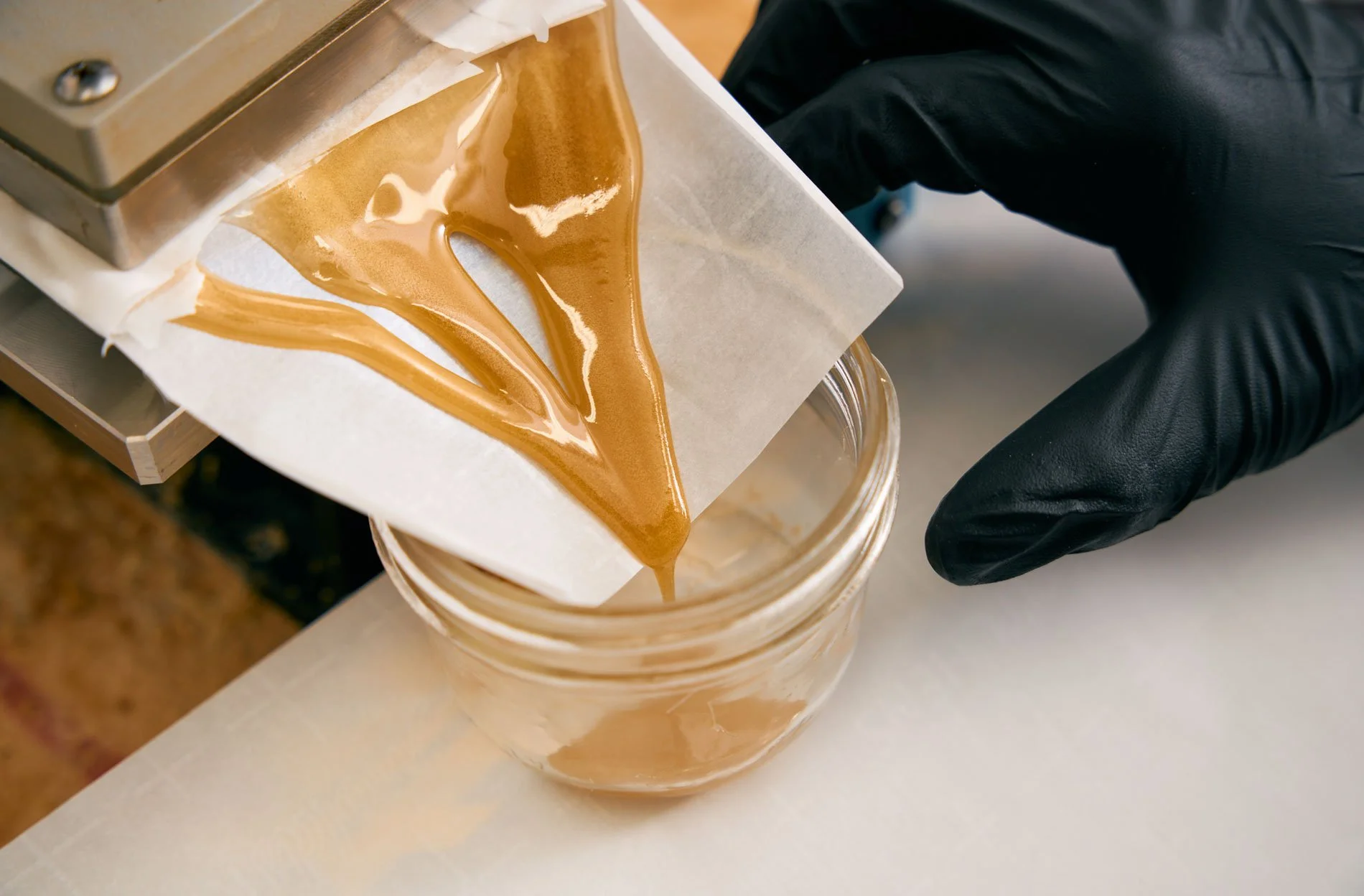
(Rosin Being Extracted From Bubble Hash)
Indica or Sativa? Types of Cannabis & Effects
When shopping at a local dispensary, customers often encounter three categories of cannabis strains: Indica, Sativa, and Hybrids. These categories are meant to differentiate strains based on their expected side effects and profiles.
The traditional classification suggests that Indicas are typically relaxing and sedating, while Sativas are known for their revitalizing and energizing effects, along with increased cognitive responses that can be beneficial for creative tasks. Hybrid strains, as the name implies, offer a combination of both Indica and Sativa effects, with various degrees of potency from each.

What’s The Big Difference?
When someone shops at their local dispensary, they often find 3 categories to separate products; Indica, Sativa & Hybrids. These 3 sub categories are meant to separate strains by expected side effects & profiles.
The commonly accepted classification of Indicas & Sativas is that Indicas are often sedating & relaxing, and Sativas are more revitalizing, energetic with increased cognitive responses & useful for creative tasks. As expected, Hybrid strains have an ever evolving combination of Sativa & Indica effects.
What Dictates A Hybrid?
When it comes to Hybrids, any two strains can be combined to form a new one. Combining Sativas & Indicas often results in an relaxed alertness, never fully sedating but also not inducing anxiety often associated with Sativas. To further increase already common side effects found on one side or the other, breeders will often take two Indicas or two Sativas to “double” up on expected results.
It’s important to remember that everyone and anyone can react very differently to the same strain as another person. Not all Sativas give you a ton of energy & not all Indica strains cause couch lock or sedative effects. Differentiating metabolisms and body chemistry drastically effect how the body reacts to specific cannabinoids and to what degree.
What Role Do Terpenes Play?
Another differentiation comes in the form of smell & tastes. Generally, Sativa strains tend to smell fruity & sweet with spice notes. Indicas on the other hand tend to lean more towards musky, earthy & almost “Stinky”. Terpenes within Cannabis cause these flavor distinctions & are associated with THC & CBD. Although Terpenes play such a vital role in taste and enticing smells, their medical potential is substantially more important. Because terpenes interact with other Cannabinoids, they often play just as important a role in determining strain effects as the THC/CBD values themselves.
If you’d like to learn more about Terpenes & their medical benefits, click HERE <-
Source / Links :
Leafly - Indica vs. Sativa
Cresco Labs - Indica vs. Sativa
HealthLine - Sativa vs. Indica

Cannabinoids & Terpenes: Relationship And Differences
Cannabinoids are a group of chemicals found in Cannabis that produce drug-like effects in the body. The primary cannabinoid in Cannabis is THC, and other cannabinoids include CBD, CBG, CBN, and many more. While Cannabis as a whole has not been approved for medical use by the FDA or government, certain cannabinoids like CBD have been approved as prescription medication to treat conditions such as epilepsy.
Some of the more popular and well-known Cannabinoids Including THC & CBD.
What are Cannabinoids?
Cannabinoids are a group of chemicals found in Cannabis that produce drug-like effects in various regions of the body. Common bodily reactions include central nervous system & immune system responses. The primary Cannabinoid found in Cannabis (Marijuana) is THC or Delta-9. Other Cannabinoids include CBD, CBG, CBN & over 100 others.
Has The FDA or Government approved Cannabis for medical use?
Although Cannabis as a plant has not received approval from either entities, specific Cannabinoids (Like CBD) have been approved and released as prescription-only medication to treat multiple conditions including but not limited to epilepsy.
What health conditions is Cannabis or Cannabinoids useful in treating?
Common health conditions found to respond well to Cannabis & Cannabinoid treatment include epilepsy, nausea & vomiting brought on from chemotherapy, loss of appetite & weight loss in those suffering from HIV/AIDS and chronic pain associated with a wide range of genetic disorders. Although Cannabis will undoubtedly be found to help and possibly cure other medical conditions in the future, research regarding these other use cases are still in the early stages or working through legal restrictions.
What sorts of Cannabinoid experiments & research is being conducted?
2015 & 2018 studies including chronic pain’s relationship with THC / CBD
2017 study related to reduced opioid use when paired with specific cannabinoids
Ongoing studies involving CBD and it’s reduction of social anxiety
2015 study reviewing THC effects on Tourette syndrome tic severity
Multiple 2014 studies pertaining to Multiple Sclerosis & its response to specific cannabinoids
Recent studies dedicated to symptom reduction in patients suffering from PTSD
What are Terpenes & how are they associated with Cannabis?
Simply put, Terpenes are the chemical compounds that give Cannabis and many other plants their pungent smells & flavoring. With over 150 different Terpenes, Cannabis can come in an wide arrange of combinations leading to very differentiating side effects.
What are some medical benefits of Terpenes & how do they affect the human body?
Terpenes have an abundance of medical uses including antiviral (virus killing ability), anti-cancerous (inhibiting the growth of cancer) & antimicrobial (ability to slow or stop microorganisms). Up until recently, medical benefits & therapeutics have been reserved to THC / CBD. Recent discoveries involving Terpenes & Cannabinoids have led to minor & small abundance chemicals coming into the spotlight. The same effects that Terpenes have on Cannabis (Fighting of pathogens & microbes) are commonly found to function similarly inside the Human body.
Sources :
Cannabis (Cannabinoids) - NCCIH
Cannabinoid - Cancer.gov
What are Cannabis Terpenes - Leafly
21+ Only
Are you 21 years of age or older?