


 Eugene Cannabis Education · Since 2014
The Green Health Blog — Cannabis Education, Strain Guides & Eugene Community News
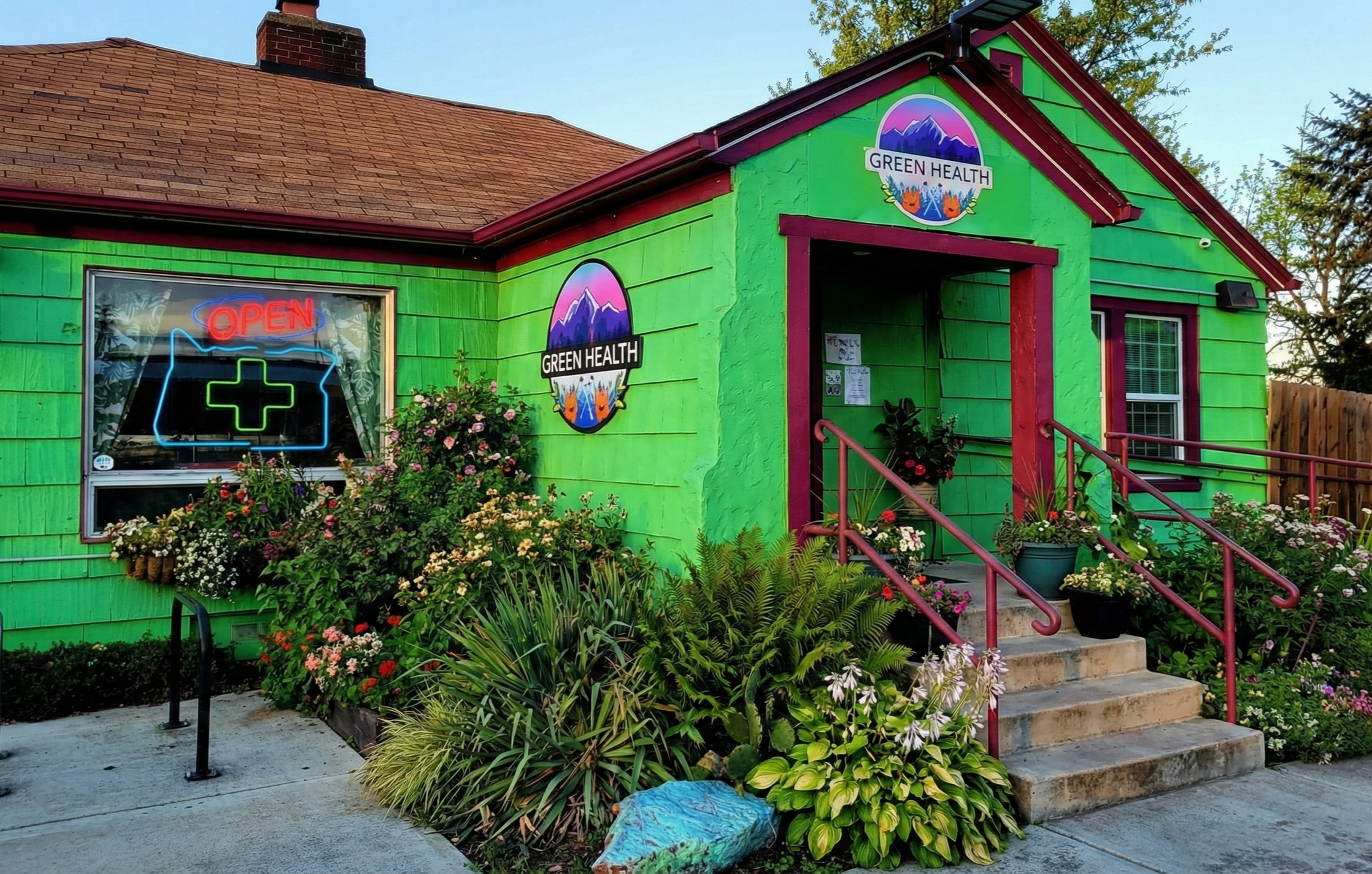
Welcome to the Green Health Blog — your go-to resource for cannabis education, product guides, and local news from Eugene, Oregon. We write for everyone: locals from Bethel-Danebo, Santa Clara, and River Road who want to stay up to date on what’s new at our dispensary, travelers landing at Eugene Airport who want to understand Oregon’s cannabis laws, and commuters along Highway 99 looking for deals on their way through town.
Learn About Cannabis in Oregon
Oregon’s cannabis scene is always evolving — new genetics, updated regulations, and more product options than ever before. Our blog breaks it down in plain language so you can shop with confidence. You’ll find beginner-friendly guides covering how to choose the right strain, the differences between flower, edibles, and concentrates, and what to expect from each cannabinoid family.
Whether you’re brand new to cannabis or you’ve been a consumer for years, our education posts are built to help you get more out of every purchase.
Why Cannabinoids Matter — The Big Picture
CBD, CBG, CBN, THC, THCV — how each cannabinoid works, what they do differently, and why product labels are getting more sophisticated.
Read More →CBN — The Sleep Cannabinoid Explained
What CBN is, how it forms, why it's becoming the 2026 standard for nightly recovery, and the products on our shelf that lean into it.
Read More →CBG — The Daytime Cannabinoid
CBG is the precursor to most other cannabinoids. What it does, how it differs from CBD and CBN, and the focus-leaning daytime use case.
Read More →CBD — What It Does and Doesn't Do
CBD basics: what it is, what it actually does for most people, why it's not psychoactive in the traditional sense, and the CBD products at Green Health.
Read More →Solvent vs Solventless Concentrates
Live resin vs live rosin, BHO vs hash rosin, why solventless commands premium prices, and how to choose based on your priorities.
Read More →Cannabis Tinctures — Dosing & Use Guide
Sublingual vs swallowed, microdose to standard dose, how tinctures compare to edibles, and the brands we carry at Green Health.
Read More →Oregon Cannabis Law & OMMP Resources
Whether you’re visiting Eugene from out of state, holding an OMMP card, or just trying to make sense of OLCC purchase limits, our legal coverage breaks Oregon cannabis law into plain language. RSO and FECO guidance, Schedule III rescheduling news, daily and monthly limits, and the medical card process — all reviewed and kept current.
RSO vs FECO: Differences, Uses & Which Is Right for You
The complete guide to Rick Simpson Oil and Full Extract Cannabis Oil — what they are, how they're made, dosing, and what we recommend at the counter.
Read the Full Guide →Cannabis Schedule III — What It Means for Oregon Patients
The DEA's reclassification proposal and what it could change for OMMP cardholders, dispensary tax structures, and medical access in Oregon.
Read More →OLCC Cannabis Purchase Limits 2026
How much cannabis can you legally buy in Oregon? Recreational vs medical limits, daily and monthly caps, and how OLCC tracks it.
Read More →Eugene OMMP Card Guide 2026
Step-by-step guide to getting your Oregon Medical Marijuana Program card in Eugene — eligibility, doctors, costs, timeline, and what changes after.
Read More →Strain Spotlights & Product Features
Wondering what’s on the menu before you visit our Eugene dispensary? Our strain spotlights and product features highlight what’s fresh, what our staff is excited about, and what’s trending with our customers. We cover featured strains from trusted Oregon cultivators, new edible and concentrate drops, staff picks across every category, and how to make the most of our rotating daily deals. Think of it as a preview of what’s waiting for you at 607 Highway 99 North.
Cap Junky — Sativa or Indica? Effects & Profile
Heavy-hitting hybrid from Fenario Farms. Terpene profile, effects, what we observe at the counter, and how it compares to other Cap Junky phenos.
Read More →True Glue from Tao Gardens — Strain Review
Eugene-favorite indica from Tao Gardens. Sticky, gas-forward, deeply relaxing. Effects, terpenes, and our budtender notes from the shop.
Read More →Velvet Glove — Herbal Dynamics
Smooth indica-leaning hybrid. Terpene profile, expected effects, and why it's a regular in our rotation from Herbal Dynamics.
Read More →Ice Cream Cake — Herbal Dynamics
Classic dessert-forward indica. Sweet, creamy, sedating — the kind of strain customers buy on Friday and finish by Sunday.
Read More →Malibu Marker — Strain Profile
Bright, citrus-forward sativa-leaning hybrid. Effects profile, terpenes, and where it sits in our flower lineup.
Read More →
Cannabis Schedule III & Oregon Medical Customers — April 2026 Update
Federal cannabis moved to Schedule III on April 22, 2026. What it means for OMMP medical cardholders, Oregon adult-use customers, and your Eugene dispensary.
Wondering if your OMMP card is still worth it post-Schedule III?
We just published a 2026 guide covering verified Eugene-area doctors, total cost, application steps, and the case for keeping (or getting) your card after federal rescheduling.
Read the OMMP Card GuideThis post is for informational purposes only. Federal and state cannabis law is evolving rapidly. Consult a qualified attorney, physician, or tax professional for guidance specific to your situation.
Cannabis Schedule III & Oregon Medical Customers
The DEA's April 22, 2026 final order moved certain marijuana from Schedule I to Schedule III — the first time since 1970 that the federal government has officially acknowledged cannabis has accepted medical use.
Depending on which headline you read, cannabis is "now legal," "federally reclassified," or "still illegal." All three are partly true — which is why the details matter, especially if you're an OMMP cardholder or a medical-focused customer.
We've served both medical cardholders and adult-use customers from our shop on Highway 99 since 2014. That puts us in an unusual position to explain what this order actually does — because it affects one part of our business more than the other, and the lines are blurrier than the national coverage suggests.
What actually moved to Schedule III on April 22
Two categories of marijuana moved from Schedule I to Schedule III:
FDA-Approved Drugs
FDA-approved drug products containing marijuana — for example, Epidiolex.
State-Licensed Medical
Marijuana subject to a state-issued license to manufacture, distribute, or dispense for medical purposes only.
Schedule III is a major downgrade from Schedule I. It puts cannabis in the same category as ketamine, Tylenol with codeine, and testosterone — drugs the federal government recognizes as having accepted medical use. Schedule I, by contrast, lumped cannabis with heroin and LSD.
What did not change
This is where most national coverage glosses over the details. The following remain firmly in Schedule I:
- Recreational (adult-use) marijuana — even when sold legally under a state program like Oregon's OLCC-regulated market
- Bulk marijuana, marijuana extract, and Delta-9 material used as raw inputs to make FDA-approved products
- Synthetically derived THC
- Any unlicensed cannabis activity
The dual-license question for Oregon shops
Oregon's retail cannabis landscape is mostly dual-licensed. Shops like ours hold an OLCC adult-use license and an OMMP designation to serve medical cardholders. That means on any given day we're legally operating under both programs at the same counter.
Cannabis attorneys are actively parsing this right now, and we expect guidance to evolve over the coming weeks. If you're an OMMP cardholder, the practical day-to-day hasn't changed — your card still gets you access, higher possession limits, and tax benefits at Oregon shops. (For getting a card from scratch, see our 2026 guide to OMMP cards in Eugene.)
What this means if you have a medical card
This is the most significant federal shift in your lifetime as a cardholder. Four practical takeaways:
Federal Recognition
The federal government's 55-year position that cannabis has no accepted medical use is no longer the official stance.
Research Expands
Schedule III substances can be studied with far less friction. Expect meaningful growth in medical cannabis clinical research.
Oregon Rights Unchanged
OMMP card benefits, purchasing limits, and tax exemptions on medical purchases continue exactly as before.
Shopping Is the Same
Show your card at checkout, get your medical designation, continue buying the products you rely on.
What this means if you don't have a card
If you're shopping without an OMMP card under Oregon's recreational program, almost nothing changes day-to-day:
- OLCC rules, purchasing limits, testing, and product categories are unchanged. Our OLCC purchasing limits guide covers the rec side in detail.
- Federal restrictions on banking and payment processing still apply. That's part of why we're the only Eugene shop taking Visa and Mastercard with no fees — we solved the payment problem independent of federal scheduling.
- Oregon farms, processors, shelves, and prices in the rec market are unaffected by this specific order.
The 280E tax wrinkle
Section 280E of the IRS tax code has been the albatross of state-legal cannabis businesses since the 1980s. It says if you're "trafficking" in a Schedule I or II controlled substance, you can't deduct ordinary business expenses — rent, wages, marketing, utilities — from your federal taxable income.
With the April 22 order, state-licensed medical cannabis operators can deduct those expenses like any other business. For dual-licensed Oregon operators, how 280E applies to the medical versus adult-use portions of a business is part of the gray area that will get resolved in the coming months. For pure adult-use sales, 280E still applies today.
If the broader rescheduling moves forward at the June 29 hearing, the math for the entire legal cannabis industry changes — and that's where real downstream pricing impact for customers becomes possible.
The bigger domino is still to fall
Buried in the same order that took effect on April 22 is an announcement of an expedited DEA hearing commencing June 29, 2026, to consider whether marijuana as a whole — not just FDA-approved drugs and state-licensed medical programs — should move to Schedule III.
That's the question that would change the picture for Oregon's recreational market, every dispensary, and every farm, processor, and brand in the state. A broader rescheduling could mean:
- Every state-legal cannabis operator (rec or medical) out from under 280E
- A clearer path to interstate commerce, research funding, and eventually federal banking
- Oregon farms — operating in a closed state market — looking at a much bigger customer base long-term
There's no guarantee the June hearing produces that outcome. Rescheduling proceedings can stall, reverse, or land on a narrower rule than expected. But if you want to understand where this is actually going, June 29 is the date to watch.
Not for adult-use purchases. For FDA-approved products and state medical programs — yes, the federal government just acknowledged cannabis has accepted medical use and isn't the same category as heroin. If you have an OMMP card, that shift matters more for you than most people realize. The next domino, if there is one, falls at the end of June.
— From Our Counter, Green Health Eugene · April 2026
Frequently asked questions
No. Schedule III still places cannabis under federal control — alongside drugs like Tylenol with codeine and ketamine — and the April 22, 2026 order only moved FDA-approved marijuana drug products and state-licensed medical marijuana to Schedule III. Recreational cannabis remains Schedule I under federal law, even when sold legally under state programs like Oregon's.
The practical day-to-day shopping experience for OMMP cardholders is unchanged. Your card still provides higher possession limits, medical tax exemptions, and access at Oregon shops with OMMP designation. What has changed is the federal backdrop: the federal government now formally recognizes cannabis has accepted medical use, which opens the door to expanded medical research and longer-term policy shifts. See our 2026 OMMP card guide if you don't have one yet.
Not directly for adult-use sales. Oregon's recreational market is licensed by the OLCC and the April 22 order specifies medical purposes only. For dual-licensed Oregon shops that hold both an OLCC adult-use license and an OMMP designation, how the order applies to the medical side of the business is a gray area being actively clarified by attorneys and regulators. The June 29, 2026 DEA hearing will consider broader rescheduling.
Not for Oregon adult-use customers in the short term. The rescheduling's biggest financial impact is the end of Section 280E tax disallowance, which applies to state-licensed medical operators under this order. For dual-licensed Oregon shops, the practical tax picture for the medical portion of the business is still being worked out. Broader price relief would likely require the broader rescheduling considered at the June 29 hearing.
The DEA announced an expedited hearing commencing June 29, 2026, to consider whether marijuana as a whole — not just FDA-approved and state-licensed medical products — should be reclassified to Schedule III. If that broader rescheduling moves forward, it would significantly impact all state-legal cannabis operators, including Oregon's recreational market, primarily through the removal of 280E tax exposure and expanded research access.
No. Interstate transportation of cannabis remains federally prohibited under the Controlled Substances Act, regardless of the rescheduling. Crossing a state line — even between two adult-use states, and even as an OMMP cardholder — with cannabis purchased at a licensed dispensary is still a federal offense.
Employment rules vary by state and employer and the April 22 rescheduling does not preempt federal drug testing requirements for DOT-regulated commercial drivers or private employer policies. CDL drivers in particular remain subject to federal testing rules that treat cannabis use as disqualifying. Always check your employer's policy and consult a qualified employment attorney for specifics.
The April 22, 2026 final order is published in the Federal Register and summarized by multiple legal-industry analyses. Reliable explainers include Foley & Lardner, Duane Morris, Foley Hoag, and Congressional Research Service coverage. Links appear in the Sources section below.
First meaningful federal shift since 1970
Federal cannabis policy just moved, meaningfully, for the first time since 1970. For OMMP cardholders, the symbolic and substantive weight of federal acknowledgment that cannabis has accepted medical use is real. For adult-use customers, your visit on April 25 looks the same as your visit on April 21. For dual-licensed Oregon shops like ours, the picture is genuinely complicated — and anyone claiming certainty right now hasn't read the order closely.
We'll update this post after the June 29 hearing. Until then, if you have questions — medical or otherwise — come see us on Hwy 99. We'd rather talk it through in person than add to the noise online.
Stop in and ask us in person
607 Hwy 99 N, Eugene · Open 9 AM–9 PM every day, including holidays · Visa & Mastercard with no fees · Locally owned since 2014
Primary-source citations
- Foley & Lardner — DEA Issues Long Awaited Final Order
- Duane Morris — DEA Order Expediting Cannabis Rescheduling
- Foley Hoag — DOJ Reschedules State-Licensed Medical Cannabis
- CNN — Justice Department reclassifies state-licensed medical marijuana
- NPR — Trump eases rules on medical cannabis
- CNBC — Trump administration moves to reclassify cannabis
- Congressional Research Service — Legal Consequences of Rescheduling Marijuana
Frequently Asked Questions
The questions we've been hearing all week at the counter
No. Schedule III still places cannabis under federal control — alongside drugs like Tylenol with codeine and ketamine — and the April 22, 2026 order only moved FDA-approved marijuana drug products and state-licensed medical marijuana to Schedule III. Recreational cannabis remains Schedule I under federal law, even when sold legally under state programs like Oregon's.
The practical day-to-day shopping experience for OMMP cardholders is unchanged. Your card still provides higher possession limits, medical tax exemptions, and access at Oregon shops with OMMP designation. What has changed is the federal backdrop: the federal government now formally recognizes cannabis has accepted medical use, which opens the door to expanded medical research and longer-term policy shifts.
Not directly for adult-use sales. Oregon's recreational market is licensed by the OLCC and the April 22 order specifies medical purposes only. For dual-licensed Oregon shops that hold both an OLCC adult-use license and an OMMP designation, how the order applies to the medical side of the business is a gray area being actively clarified by attorneys and regulators. The June 29, 2026 DEA hearing will consider broader rescheduling.
Not for Oregon adult-use customers in the short term. The rescheduling's biggest financial impact is the end of Section 280E tax disallowance, which applies to state-licensed medical operators under this order. For dual-licensed Oregon shops, the practical tax picture for the medical portion of the business is still being worked out. Broader price relief would likely require the broader rescheduling considered at the June 29 hearing.
The DEA announced an expedited hearing commencing June 29, 2026, to consider whether marijuana as a whole — not just FDA-approved and state-licensed medical products — should be reclassified to Schedule III. If that broader rescheduling moves forward, it would significantly impact all state-legal cannabis operators, including Oregon's recreational market, primarily through the removal of 280E tax exposure and expanded research access.
No. Interstate transportation of cannabis remains federally prohibited under the Controlled Substances Act, regardless of the rescheduling. Crossing a state line — even between two adult-use states, and even as an OMMP cardholder — with cannabis purchased at a licensed dispensary is still a federal offense.
Employment rules vary by state and employer and the April 22 rescheduling does not preempt federal drug testing requirements for DOT-regulated commercial drivers or private employer policies. CDL drivers in particular remain subject to federal testing rules that treat cannabis use as disqualifying. Always check your employer's policy and consult a qualified employment attorney for specifics.
The April 22, 2026 final order is published in the Federal Register and summarized by multiple legal-industry analyses. Reliable explainers include Foley & Lardner, Duane Morris, Foley Hoag, and Congressional Research Service coverage. Links appear at the bottom of this post.
21+ Only
Are you 21 years of age or older?